


Professional Congress on Wood Treatment and Conservation
EXPOCIDA MADERA 2027
Following the success of its previous edition, EXPOCIDA MADERA will hold another event on 3 and 4 March 2027, cementing its position as the leading professional conference in the field of timber treatment, protection and conservation.
This event is aimed at professionals in the pest management sector, as well as companies and specialists involved in construction, renovation, architecture, restoration, maintenance and heritage conservation, who are keen to gain access to the most up-to-date knowledge and the most innovative and effective treatments for tackling the main challenges relating to timber.
The new edition will once again bring together leading national and international experts, who will share the latest advances in prevention, diagnosis, maintenance, pest management, structural protection and timber conservation. Furthermore, EXPOCIDA MADERA 2027 will offer a unique space for exchanging experiences, networking and reflecting on new trends in the sector.
Here at Anecpla, we are delighted to announce this new edition, following a previous event which far exceeded its targets for attendance, participant satisfaction and event visibility. This support reinforces the importance of continuing to promote a specialised forum for knowledge, innovation and professional collaboration.
We look forward to seeing you on 3 and 4 March 2027!
Official dinner
Wednesday, March 3, 2027, Aretxondo Restaurant
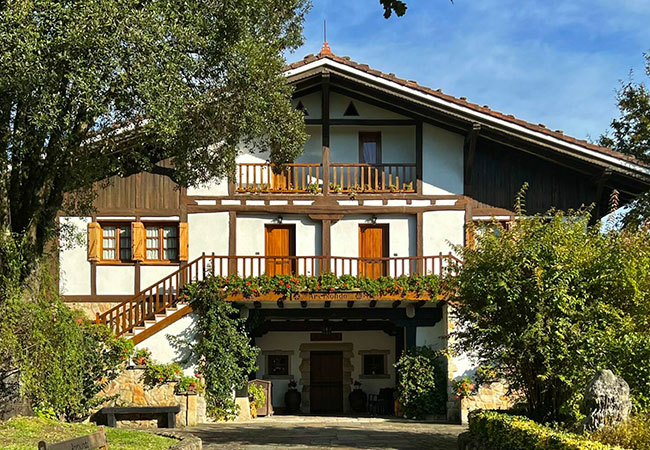
The EXPOCIDA MADERA 2027 Dinner will be held at the Aretxondo Restaurant, located in a traditional Basque farmhouse where wood, architecture, and cuisine are integral to the venue’s identity.
This setting is particularly closely tied to the conference’s theme, in which wood takes center stage through traditional Basque architecture and its structural elements.
Address: Elexalde Neighborhood, 20, 48960 Galdakao, Bizkaia.
Located in Galdakao, a few kilometers from Bilbao, the Aretxondo Restaurant is housed in a farmhouse built in the traditional Basque architectural style, set within a natural environment and characterized by the use of wood as one of its primary structural and decorative elements. Its spacious dining room retains a rustic aesthetic, with high ceilings and exposed wooden beams, elements that reinforce the building’s character.
The farmhouse is one of the most representative examples of Basque rural architecture, in which wood and stone have traditionally played an essential role from structural, functional, and aesthetic perspectives.
In this way, the dinner will also allow one of the Congress’s key themes: wood, present in the structure, the beams, the finishes, and the very architectural personality of the space—to be highlighted outside the Congress sessions.
Complementing this connection to the built heritage is a culinary offering based on Basque cuisine, local produce, and seasonal ingredients, all in keeping with the identity and the region where this edition of the Congress is being held.
A unique setting where architecture, wood, tradition, and gastronomy will come together to mark one of the key moments of gathering and fellowship at EXPOCIDA MADERA 2027.
Technical visit
Thursday, March 4, 2027, Ferrería de el Pobal (MUSKIZ)
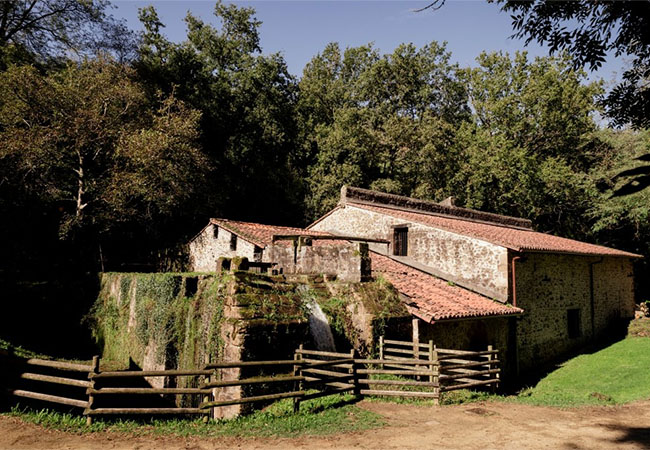
EXPOCIDA MADERA 2027 will include a technical tour of the El Pobal Ironworks in Muskiz, a site of particular interest for learning about the historical relationship between forest resource management, wood, and industrial activity.
The tour will provide an opportunity to discover how this medieval water-powered ironworks operated and to understand the role that wood and charcoal played in traditional iron production processes.
Address: El Pobal neighborhood, no. s/n. Muskiz-Sopuerta Highway. 48550, Muskiz (Bizkaia).
The El Pobal Ironworks is a particularly representative example of Bizkaia’s industrial heritage and allows us to analyze, from both a technical and historical perspective, how iron production was organized before modern industrialization.
The operation of these facilities depended directly on the resources available in the surrounding area. Water was used as a source of energy to power the machinery, while wood from nearby forests was turned into charcoal, an essential fuel for maintaining the temperatures required during the ironworking process.
Throughout the tour, visitors will learn about some of the key elements that were part of the production process—such as the forge, the hammer mill, the bellows, and the hydraulic system—as well as how the natural resources needed to sustain operations were managed and utilized.
The tour thus offers an opportunity to delve deeper into the historical connection between forests, wood, energy, and industry, and to understand how forest management was closely linked to the region’s economic and productive development.
This activity is particularly relevant to the themes of EXPOCIDA MADERA and will complement the conference sessions by providing a practical perspective on heritage, timber management, and the use of wood as a strategic resource throughout history.
MAIN SPONSORS





Conference Catering
Sponsor

Official Dinner
Sponsor

Wood Workshop
Sponsor

Xylophagous Workshop
Sponsor
Technical Workshop
Sponsor
Collaborating Companies



Collaborating Associations


Collaborating Entities

